

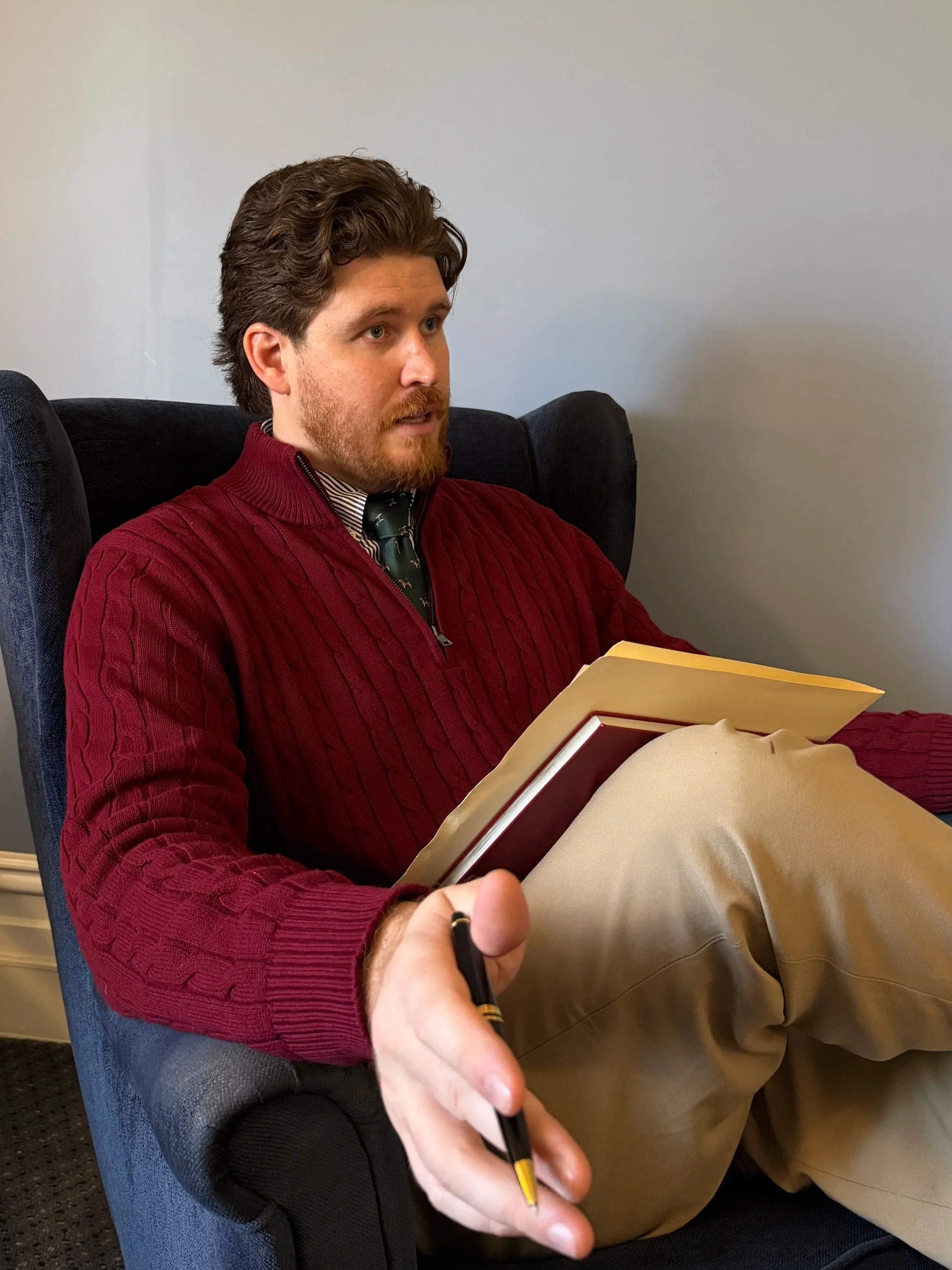
Meet Thomas, a thoughtful clinical neuropsychologist who helps people make sense of changes in thinking, behaviour, and brain health.
Thomas provides neuropsychological consultation and assessment for people experiencing concerns about memory, attention, thinking, behaviour, or everyday functioning. He understands that concerns about brain health can feel overwhelming, and takes care to make sure that people feel informed, understood, and able to ask questions along the way.
Thomas is known for his thoughtful and thorough approach. He takes time to understand the broader context around each person’s difficulties, and aims to ensure that his assessments provide clarity not only for the individual, but also for the people and professionals supporting them. Thomas views the assessment as an opportunity to develop a meaningful understanding of the person behind the referral question, in addition to providing clear answers to guide care, planning, and decision-making.
Thomas’ experience spans outpatient rehabilitation, inpatient hospital settings, specialist diagnostic services, clinical research, forensic practice, and clinical academic work. He has particular interests in dementia syndromes, multifactorial acquired brain injury, and complex neuropsychological presentations more broadly. But overall, he is most interested in helping people to better understand cognitive symptoms that may be difficult to explain.
Alongside his work at Flux, Thomas works across forensic, hospital, and academic settings, including teaching postgraduate psychology students and contributing to research in functional brain mapping. Prior to becoming a psychologist, Thomas worked as a qualified carpenter in his family’s construction business, and he believes that this continues to shape his practical, common sense approach to understanding and solving complex problems.
-
— Master of Clinical Neuropsychology
— Bachelor of Psychology (Honours)
— Cert III Carpentry & Joinery -
Thomas is available for neuropsychological assessments and has a particular interest in assessing for:
— Dementia and cognitive decline
— Complex/multifactorial acquired brain injury
— Alcohol and substance related brain injury
— Epilepsy-related cognitive changes and peri-surgical supports
— Medico-legal neuropsychological assessments
— Neurological and complex cognitive presentations
— Cognitive baselines
— Eligibility for formal supports (e.g., NDIS, DSP)All assessments will include a report and a feedback session.